Apartment building, 6 residential units
6residential units
2heat pumps
4days to complete
Energy classG→B
Final energy, kWh/a124,685→31,171−75%
CO₂ emissions25.1 t/a→0 t/a−100%
CO₂ costs 2028€3,007→€0

The heating is old, the Building Energy Act sets deadlines, and nobody at the owners' meeting wants to vote for a six-figure special levy. A provider builds, finances and operates the new heat supply. The association only pays the agreed heat price.
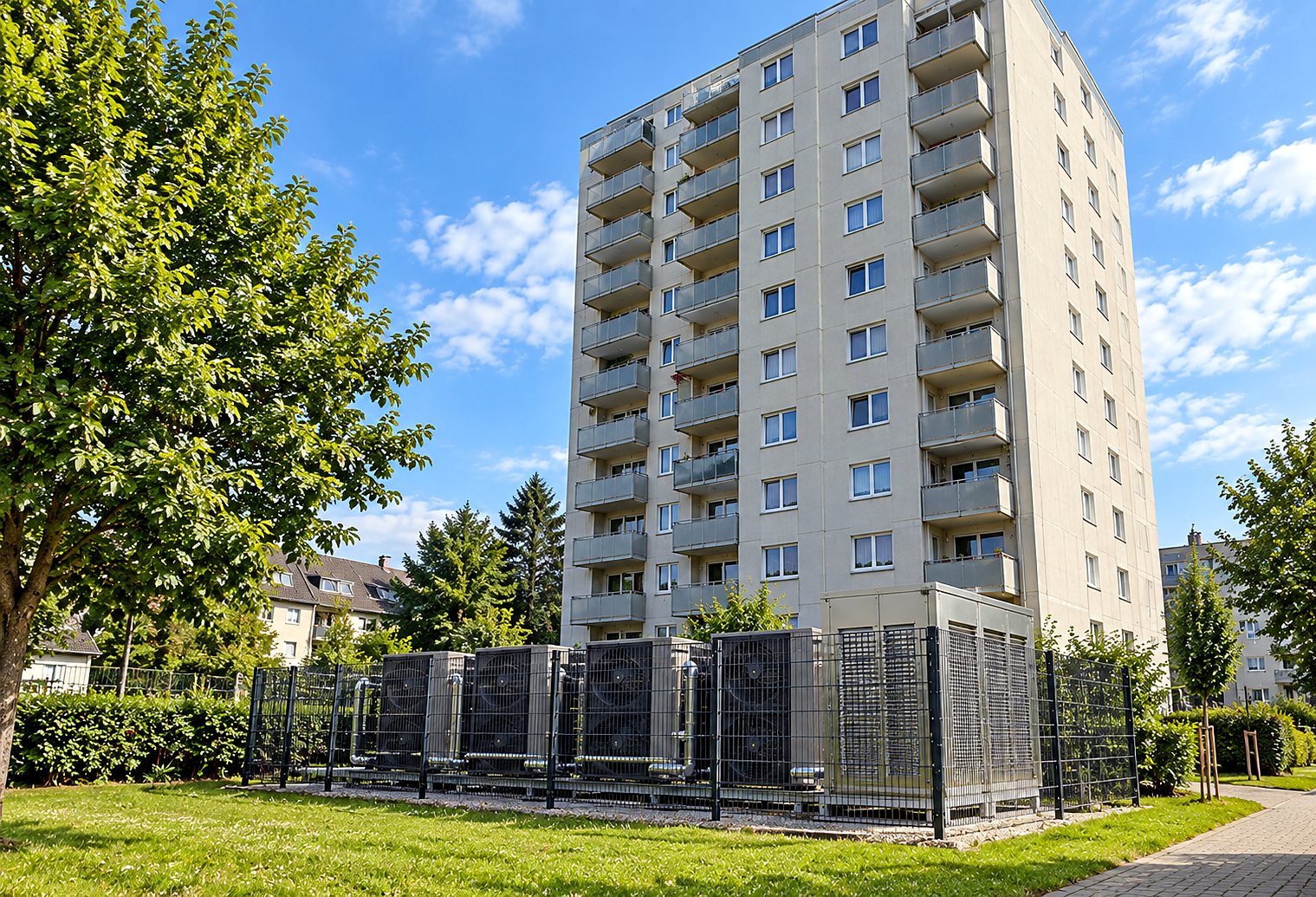
Owner-occupiers, investors and older owners have different interests. A large investment rarely finds a majority at the meeting.
A new boiler room costs six figures. A special levy hits every owner, so the topic is postponed year after year.
The Building Energy Act and municipal heat planning set deadlines, the CO₂ price on gas and oil rises. Flats in buildings of classes G and H sell and finance worse.
Heat costs run through the annual statement as before. Kola NetZero is paid by the provider, the assessment is free for the association.
Planning, conversion and operation are handled by the provider. Tap the points on the image.
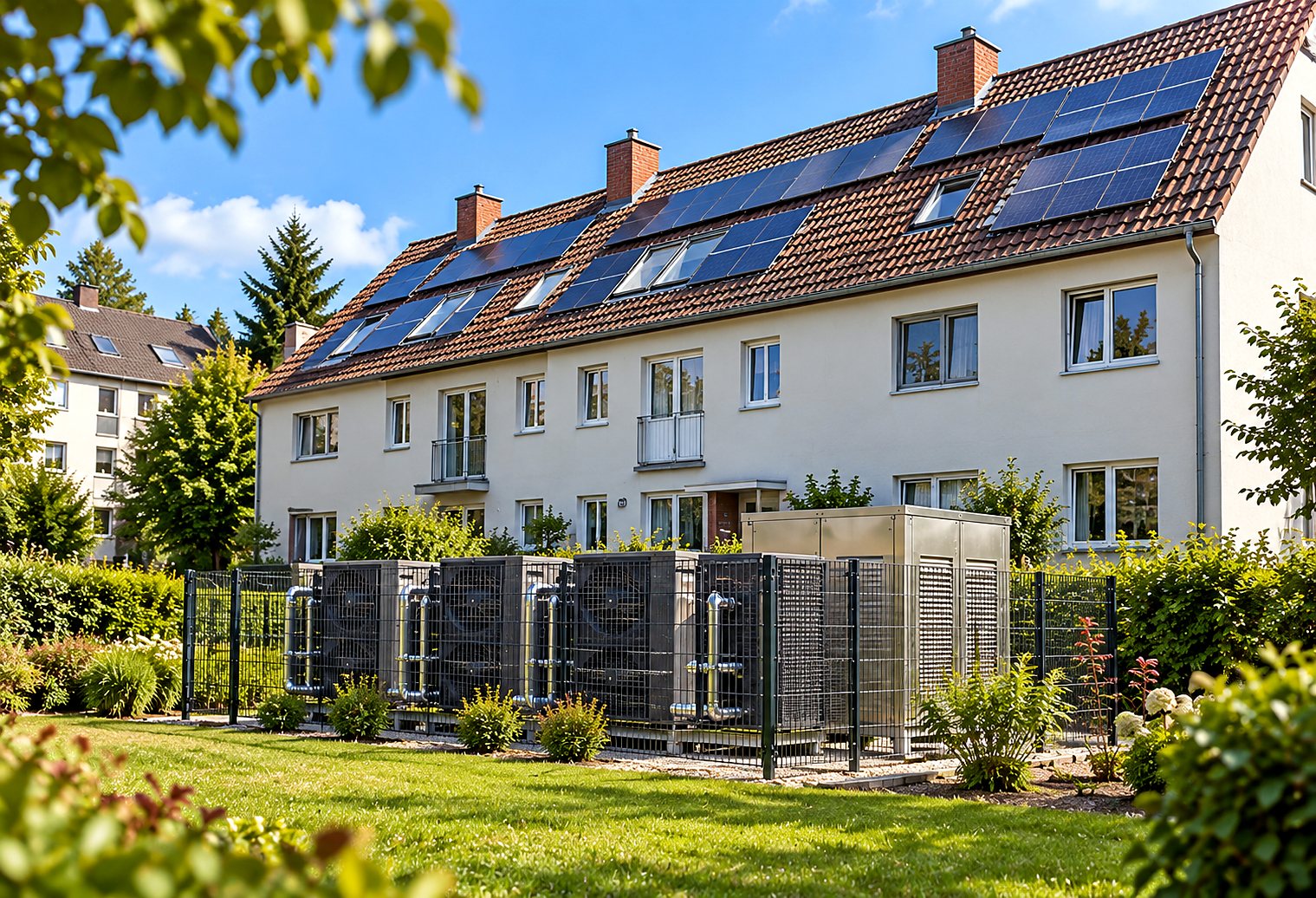
Not required for the switch. If the roof and the numbers fit, the provider can add photovoltaics.
Take over most of the heat generation, the existing boiler stays in the system. The outdoor units stand enclosed on the property.
The heat pumps are connected to the existing boiler room in the common property. No intervention in individual flats.
Sensors and valves in the basement continuously balance the pipe network and lower the flow temperature without any flat getting cooler.
Work only takes place in the common property: boiler room, outdoor area and roof. The switch-over is planned outside the heating season and coordinated with the manager.
Site visit of boiler room and roof, design based on the building's actual consumption.
Offer and documents for the owners' meeting, the manager puts the topic on the agenda.
Work in the boiler room, outside and on the roof, switch-over outside the heating season.
Maintenance, fault service and billing sit with the provider.
Depending on the starting point up to five classes better. That applies to the whole building and therefore to every flat, in sale, letting and financing.
A fixed price per kilowatt hour instead of fluctuating gas prices. Letting owners pass the costs on through the service charges as before.
No special levy, and the maintenance reserve remains available for other measures on the building.
Two apartment buildings in Rhineland-Palatinate, converted without any investment by the owners. The existing boiler stays in the system, the heat pumps cover most of the heat generation.
Figures according to the heat provider's project documentation. CO₂ on a balance-sheet basis under BEHG. Energy class indicative. Property data anonymised.
Address and key data, plus energy certificate and heating cost statements. Takes two minutes, we read the key data from your documents.
We check the data and align the design with the provider. Feedback usually within 5 working days.
Written offer with a guaranteed heat price, site visit of boiler room, floor space and roof.
The owners' meeting resolves on the heat supply contract, then the switch-over is scheduled outside the heating season.
The owners' association as a legal entity, represented by the manager, based on a resolution of the owners' meeting.
Since the 2020 reform, structural changes can usually be resolved by simple majority (section 20 WEG); cost allocation is governed by section 21 WEG. How the resolution must be passed in your association is checked by the manager against the declaration of division.
No special levy. Heat costs run through the annual statement as before, allocated by the applicable key.
Tenants receive heat as before and pay for it through the service charges. Switching to heat supply is regulated in section 556c of the German Civil Code.
Yes. You can submit the property, we assess it and provide offer and documents so that the manager can put them on the agenda of the next meeting.
Nothing. Assessment, site visit and offer are free of charge and without obligation. Kola NetZero is paid by the provider.
Energy certificate and heating cost statements are enough to start. Feedback within 5 working days, free and without obligation.
Submit property with documents